Dear friends in the Lord,
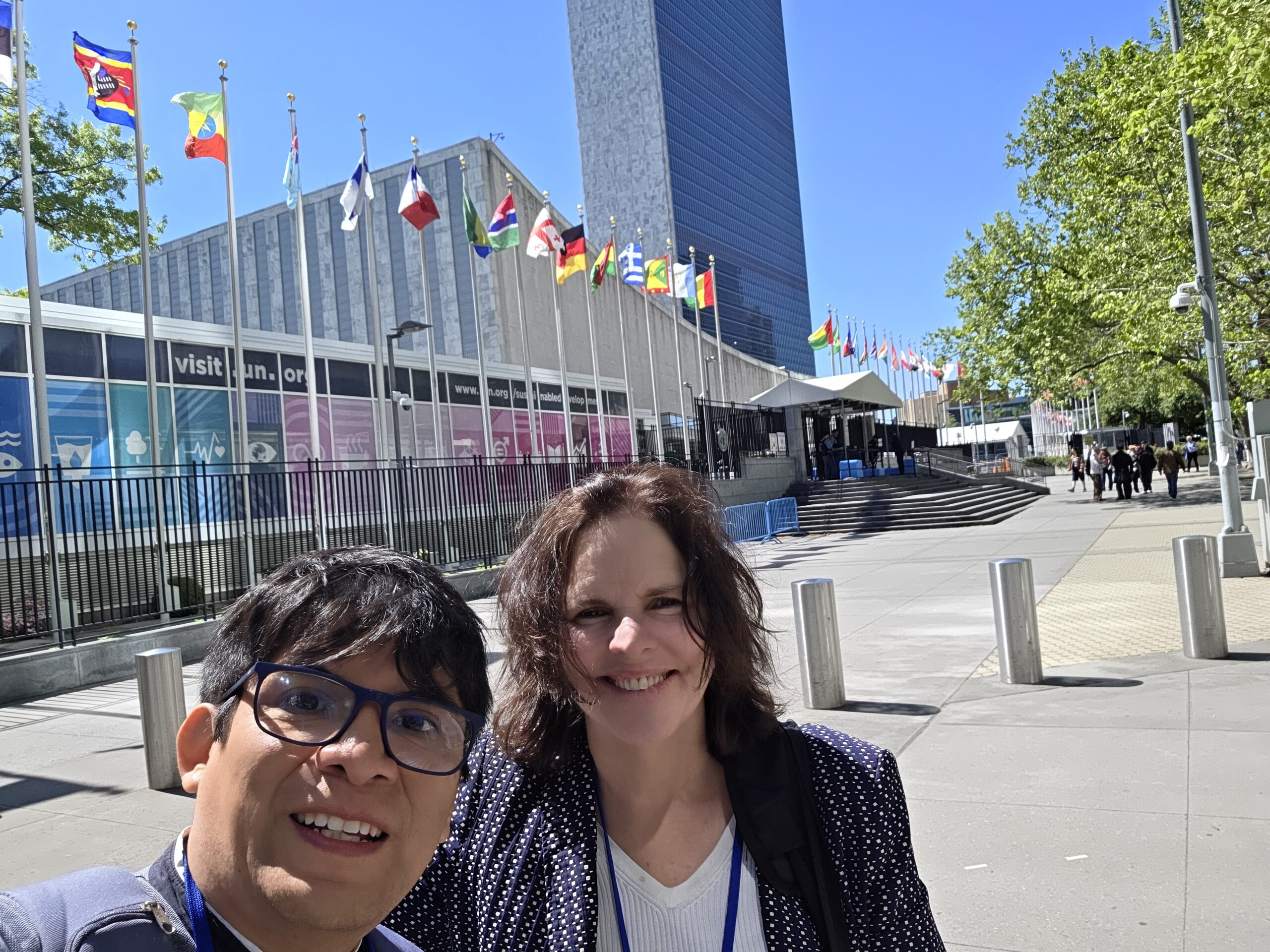
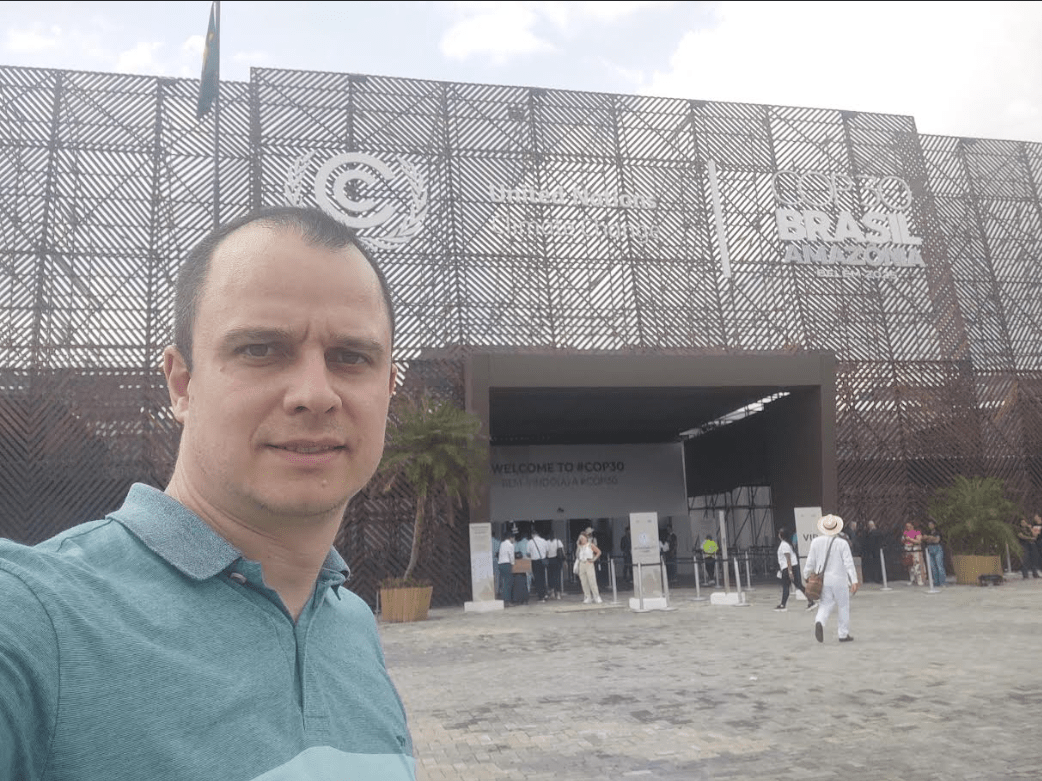
My name is Rafael Finatti, from Curitiba in southern Brazil, and I currently serve on the Latin American coordination team of CVX/CLC. I attended COP30 in Belém do Pará from 10–15 November 2025, as part of my work leading sustainability initiatives within the Marist Group, which is linked to the Marist Brothers of Champagnat. Belém – hot, vibrant and located in the heart of the Amazon – became for me a place of spiritual, intellectual and political conversion. The abundance of activities in and out of the official UN spaces created a constant discernment: where to be, what to listen to, and how to allow myself to be transformed. I moved between open public events, the Green Zone and the various parallel initiatives, while also closely following the official negotiations from the Blue Zone.
From a professional standpoint, I listened to business and industry leaders reflect on sustainability. It became clear that the transition does not depend solely on agreements between States; it demands courage within organizations and leaders capable of innovating with purpose. Many responses remain reactive, tied merely to regulation, while others are advancing in energy transition, supply chain responsibility, diversity and social impact. Yet, in most cases, sustainability is still shallow and concentrated in large corporations. In the technical debates of the Green Zone about biofuels, minerals, green finance, energy efficiency and carbon markets, I saw how urgently we need strategy, research, investment and strong international cooperation for a just transition. A thriving forest, combined with sustainable markets, is central to this path.
Days later, I wrote a reflection on LinkedIn summarizing COP30: “On one side, the strength of the streets – Indigenous peoples, riverine communities, youth, environmental defenders – carrying in their bodies and ancestral wisdom what the world has not yet heard as it should. On the other, the exhausted face of multilateral negotiations, trying to reconcile incompatible interests while the climate crisis advances faster than decisions. Belém brought all of this into the same territory. I felt this tension throughout the week, and even more strongly when I returned home and followed the decisive final days of negotiations. COP30 delivered important advances: the Belém Package, increased adaptation finance, new global indicators, the tropical forests fund, and the institutionalization of the idea of a just transition. But it fell short of what could have been transformative: a clear commitment to phasing out fossil fuels. If this were the ‘COP of truth’, then the truth is a hard one: the crisis is climatic, but the struggle is political, economic and ethical.
From the perspective of CVX/CLC
As a Laudato Si’ Animator and a member of CLC, I sought out the spaces that dialogued most deeply with Integral Ecology. Two moments touched me profoundly.
The first was the Symposium organized by the National Conference of Bishops of Brazil, with Church movements and cardinals from across the Global South. They endorsed a document rejecting “green capitalism,” calling on wealthy nations to pay their ecological debt, and urging concrete actions to limit global warming to 1.5°C. We reflected on the fact that ecological conversion is not a method, but a change of heart: renewing our way of inhabiting the world, recognizing the sacredness of creation, and defending the poor, the vulnerable and the territories that are the living body of the Earth. It is a prophetic call, deeply aligned with Laudato Si’, Laudate Deum, and the pastoral vision of Pope Francis.
The second moment was the People’s Summit, where this call became even more tangible. The struggles of Indigenous peoples, riverine communities, social movements, and diasporas affected by conflict made clear the intimate link between territory, self-determination and life. It revealed the deliberate tactic of forcing migration by destroying ecosystems (soil, water, forests) that sustain human existence.
A call for our community
For us in CVX/CLC, Belém is more than an event; it is a summons. Integral Ecology must move from a beautiful discourse to a lived mission – just as we affirmed in Lebanon in 2013. And it must connect with our other frontiers of service. We are called to be prophetic agents, network builders, and living witnesses that caring for our Common Home means caring for one another. Our Ignatian spirituality must nourish our mission, but we must also organize ourselves to act, collaborate, and build bridges between territories, communities, companies and governments.
May God grant that our commitment to CLC becomes presence, listening, voice and, above all, service. Prayer prepares us for action, and action always begins with deep listening.