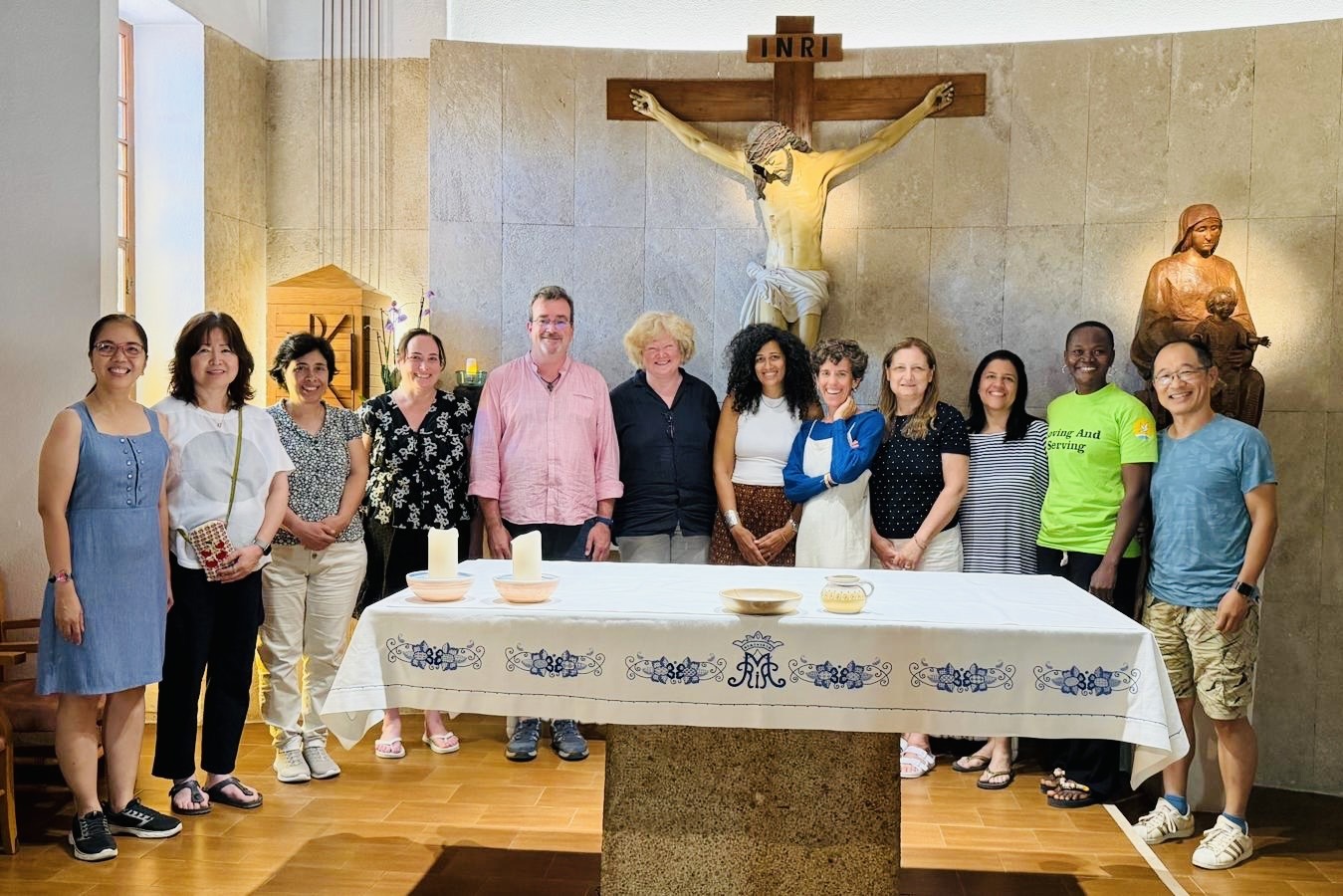
The team gathered for prayer, listening and collaboration to discern how best to support formation throughout the World Christian Life Community.
From August 20 to 23, 2026, the CVX-CLC Global Formation Team (GFT) gathered in-person at the San Alonso Rodríguez Spirituality House, known as Son Bono, in Palma de Mallorca, Spain. Engaging in a process of prayer, listening and communal discernment, team members developed deeper relationships, reflected on the reality of formation across World CLC and identified formation priorities for the coming years.
All GFT members participated in this process – from Africa: Blessing Imumoren (Nigeria); from Asia-Pacific: Cosmas Tsao (Taiwan) and Tinnah dela Rosa (Philippines); from Europe: Daniela Frank (Germany) and Maria Athayde Tavares (Portugal); from Latin America: Ivette Cáceres (Dominican Republic); from the Middle East: Marie-Claire Elgohary (Egypt) and Najat Sayegh (Lebanon); from North America: Christina Kim (USA) and Rima Bazerji (French Canada). World CVX-CLC Executive Council members Catherine Kelly (English Canada) and José de Pablo, SJ (Spain) serve as liaisons to the GFT and accompanied the process.
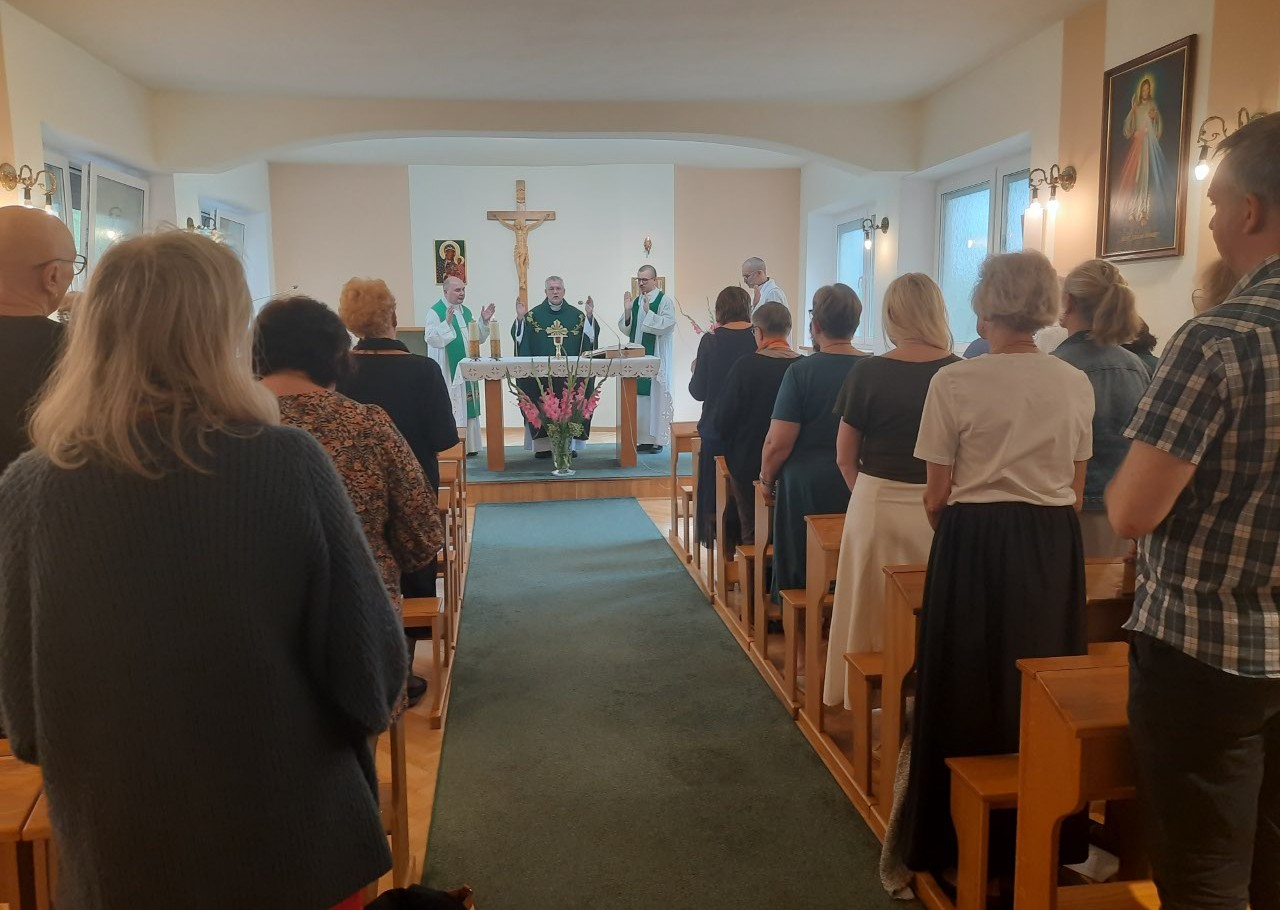
Meeting in person was especially valuable. Team-building activities gave members opportunities to share their stories, cultures and formation experiences, and to strengthen the trust and shared purpose needed to work together. Each day included the celebration of Mass. Prayer and spiritual conversation were essential to the communal discernment that guided the development of the plan.
The meeting opened with a grateful remembrance of the team’s journey since the Manresa Formation Encounter in 2022. In the meeting’s Discover phase, the team examined the realities of formation across national communities. Drawing on survey data from 26 communities and regional experiences, the team recognized significant strengths: committed members, experienced formation teams, rich Ignatian resources, and existing collaboration across regions. At the same time, challenges included limited access to the Spiritual Exercises, shortages of trained guides and companions, language and financial barriers, uneven formation in CLC identity, and the need for stronger youth, safeguarding, and mission-oriented formation.
A central insight emerged: formation must be accessible, culturally adaptable, and rooted in lived experience. Rather than treating formation documents as materials that every member must master, the team emphasized supporting guides, leaders, and other formation multipliers who can translate CLC’s spirituality and identity into concrete experiences within their communities.
NewsFour workstreams for the 2026–2030 Strategic Plan were re-affirmed as interconnected pillars of the team’s mission: 1. connecting and providing a platform for formation; 2. sustaining the life and identity of CLC; 3. attending to and responding to formation needs; and 4. reflecting forward. The work streams were understood as complementary dimensions of a single purpose, with particular attention given to strengthening CLC identity and developing the capacity of communities to sustain formation.
The Design phase transformed these insights into specific commitments. The team planned online formation offerings, a more visible global formation hub, a systematic approach to responding to national community requests, and ongoing evaluation of formation needs. It also agreed to engage and further develop a network of experts, strengthen communication with regional and national formation contacts, and explore multilingual tools to expand access.
The four-year plan from 2026 to 2030 provides a progressive formation journey. It begins in November 2026 with communal discernment. In 2027, online offerings will address safeguarding (February/March), the Spiritual Exercises (May), and local groups and discernment of a common mission (November). In 2028, the agenda may include deepening DSSE in an online encounter-style format and preparation for the World Assembly. The 2029 agenda includes deepening apostolic mission, and continued reflection on the grace of the Assembly or ongoing formation as ongoing conversion. By 2030, the proposed themes are Unity in Diversity, Synodality, and an updated and simplified Process of Growth.
The meeting also established practical mechanisms for collaboration. Full-team meetings will occur at least every two months, supported by smaller group projects between sessions. Each work stream will prepare communication content, while the World CLC communications team will support publication and distribution. The team is exploring a multiplier engagement platform, modeled on the CLC Europe WhatsApp community, to connect formation leaders through a main group, regional subgroups, and managed announcements.
The Palma meeting concluded with gratitude for the unity, generosity, and shared responsibility experienced among members. Its work points toward a formation ministry that is not merely concerned with transmitting knowledge, but with nurturing deeper CLC identity, communal discernment, and mission. The journey from 2026 to 2030 will depend on continued collaboration, subsidiarity, prayerful evaluation, and the willingness of communities to share their gifts so that formation may become increasingly accessible and transformative throughout the world CLC community.