Ha Yookyung, Eco CLC Team Leader, CLC in Korea
The Journey and Vision of the CLC Ecological Apostolate
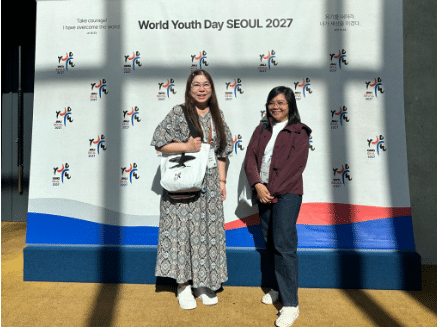
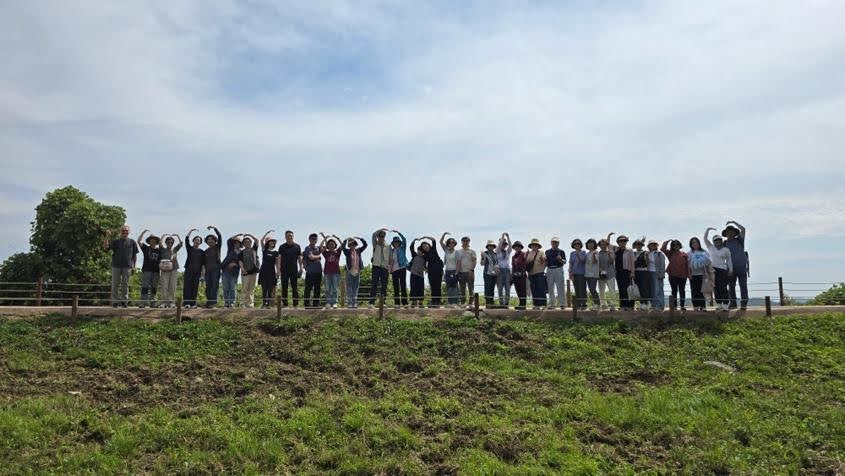
On September 27 members of CLC in Korea, their families, and friends took part in an ecological exploration at the DMZ(Demilitarized Zone). Paradoxically, in the very place where the wounds of division are most deeply engraved, life was breathing most abundantly. Because humans were unable to develop it, the Imjin River wetlands—shaped by the breath of nature—have become a place where countless plants grow and migratory birds find rest. Despite the long years of war and division caused by humankind, we offered awe, admiration, and praise to the hand of God who has continued to protect, nurture, and give life to creation. That day’s exploration was a profound time of reflection on what our CLC ecological apostolate must strive for.
Everything Is Connected
As we walked through the DMZ, I reflected on the word “connection.” Rivers flow in connection, birds cross freely between North and South, and seeds carried by the wind take root to form forests. The ecosystem is not a collection of isolated beings but an intricate web of life. The integral ecology that Pope Francis emphasizes in Laudato Si’—that “everything is connected”—was vividly alive before our eyes.
This integral perspective is at the heart of our CLC ecological apostolate. Environmental issues are not merely about protecting nature. They are questions of justice, peace, solidarity with the poor, and responsibility toward future generations. Those who suffer first and most from the climate crisis are the poorest nations, and those who pay the price of environmental destruction are the vulnerable. We seek to live an integral ecological life with this awareness—knowing that reducing plastic use is linked to environmental justice in poorer countries, and that practicing vegetarianism is connected to climate change, animal ethics, and food justice.
Hope Blossoming in Our Communities
CLC ecological activities began in the early 2000s as small local gatherings. Members opposed the Saemangeum reclamation project, shared eco-friendly food, and promoted zero-waste products. Recognizing that the climate crisis is the most urgent issue of our time and that caring for our common home is an imperative, the CLC in Korea discerned ecology as one of its major communal apostolates in 2020. In 2024, the Eco CLC was officially launched to carry out this apostolate, developing concrete initiatives through three local communities.
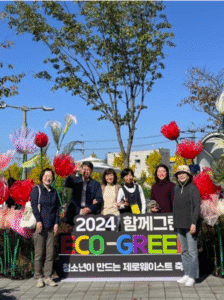
- In Yongin Pogok, the community organizes a Youth Zero-Waste Festival, ecological study groups, and a “Sharing Kitchen” to build solidarity with the local neighborhood.
- In Busan Bansong, centered around the “Hope School,” ecological lectures, zero-waste shop visits, and youth engagement programs are being carried out.
- In Seoul Geumcheon, the youth space Morak Morak runs the “Carrot Corner,” spreading a culture of sharing and reuse.
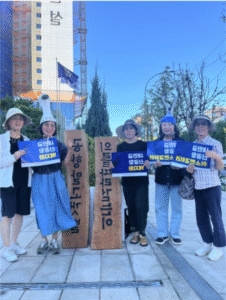
We also collaborate with Catholic Climate Action and diocesan networks, actively participating in movements such as climate justice campaigns, the shutdown of the Samcheok coal power plant, anti-nuclear activities, the suspension of the Sejong Dam operation, and opposition to the Saemangeum airport project. In addition, all CLC members are taking part in ecological spirituality retreats this year and next—giving thanks for the gift of creation freely given by God, confessing ecological conversion, and renewing their commitment to action.
This journey, however, is not without challenges. There are always more urgent concerns; participation is sometimes limited; and at times, we feel powerless before the massive wall of consumerist capitalism. Yet, signs of hope are unmistakable: growing awareness among members, the interest and participation of the younger generation, and the cultural transformation slowly built through small collective actions.
Returning to the Heart
On October 1, 2025, Pope Leo XIV delivered a deeply meaningful message at the “Raising Hope on Climate Change” conference marking the 10th anniversary of Laudato Si’. The Pope invited us to “return to the heart,” emphasizing that true ecological conversion can take place only there. He said,
“It is only by returning to the heart that a true ecological conversion can take place. We must shift from collecting data to caring; and from environmental discourse to an ecological conversion that transforms both personal and communal lifestyles.”
In other words, we are called to move beyond simply gathering data or engaging in discussion, toward a genuine ecological conversion that transforms how individuals and communities live. The Pope also emphasized that we must grow within our four fundamental relationships—with God, with others, with nature, and with ourselves—and he asked:
“God will ask us if we have cultivated and cared for the world that He created, and if we have taken care of our brothers and sisters. What will be our answer?”
Before this question, our community reflects on the answer we wish to offer together.
Toward a Community of Integral Ecology
We wish to respond through a community that lives an integral ecological way of life. CLC General Principle No. 4 calls us to live a “simple lifestyle.” This means pursuing the Christian virtues of moderation and simplicity, while striving to see the world through the eyes of the poor. We stand in solidarity with those who suffer from the climate crisis and with all beings sacrificed on the frontlines of ecological destruction. Above all, we will make deliberate efforts to support and accompany young people—the future generation.
Our mission rests on three pillars.
- The first is the deepening of ecological spirituality—encountering God in creation and nurturing ecological conversion.
- The second is sustaining small, everyday practices within the community, encouraging one another in continuity.
- The third is social solidarity and advocacy—seeking structural transformation through climate justice campaigns, solidarity with sites of ecological damage, and policy proposals.
When God one day asks us that question, may we be able to answer, “We lived faithfully with our community.” Though the reality of the climate crisis is dark, it is not too late. Hope is already alive—within us and around us. We are the ones who awaken, nurture, and live that hope. This is the message that the CLC Ecological Apostolate wishes to share with the world.
-
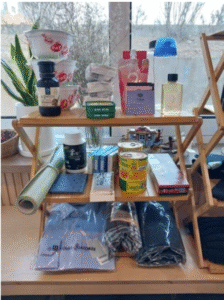
- Carrot Corner
-
- Opposition to Saemangum Airport
-
- Zero Waste Festival at Youngin