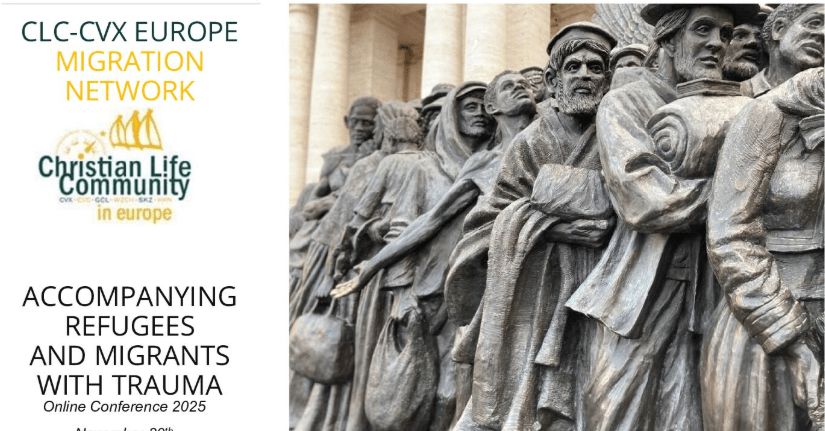
Online Conference, organised by the CLC Euro Migration Core Team – 30/11/2025
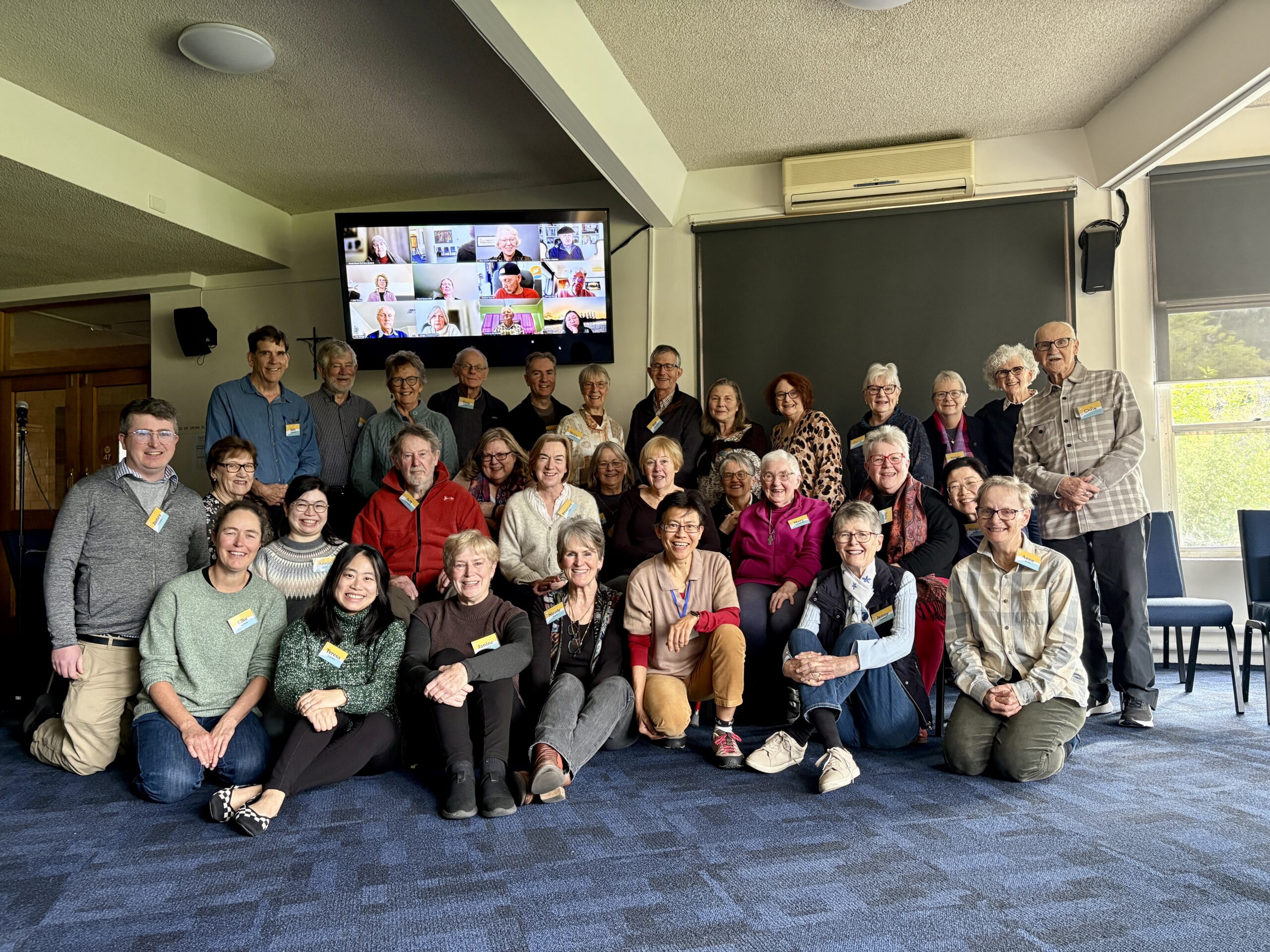
The European Migration Core Team Europe aims to facilitate the network of CLC companions concerned with migration issues and/or involved in welcoming exiled people. Several times a year, the MCT organises online prayers, experience sharing and conferences. On 30 November 2025, a conference on the theme of ‘Accompanying refugees and migrants with trauma’ brought together around 50 people from some 20 countries, including non-European countries (Lebanon, USA, Egypt and Guatemala), around two speakers:
- Ms Sara Zingariello, Counsellor JRS Malta
- Fr Leo de Weerdt SJ, Head of Justice Chaplaincy and Member of the Board at JRS Belgium
The number of participants and countries represented, and the quality of the sharing of experiences that followed the presentations by the two speakers, testify to the importance of this subject and the extent to which many CLC companions are concerned by these issues and involved with people in situations of migration; and how valuable it is to have opportunities to share together the wealth of each person’s experiences within one global Community affected by the tensions of the world.
Ms Sara Zingariello, Counsellor JRS Malta
Sara, an EMDR practitioner specialising in trauma treatment and working full-time with JRS Malta since 2019, highlighted how trauma shapes people’s lives. She provided an overview of the history of migration in Malta and shared key insights from her work:
- Most refugees have experienced traumatic events, though not all develop PTSD.
- Many demonstrate resilience and hope.
- Trauma affects individuals differently; accompanying people requires openness and a willingness to journey with them.
- Difficulties in daily life – such as struggling to get out of bed, aggression or anxiety – often emerge from past trauma rather than post-migration experiences.
- Refugees arriving via the Central Mediterranean route often experience torture and extreme hardship in Libya.
- Restoring right relationships involves looking within ourselves and those around us to identify broken connections and create safe spaces for re-integration. Meeting people “where they are’’ is essential.
Ms Zingariello concluded her speech by offering some ideas for personal reflection on how these issues affect and challenge us.
Fr Leo de Weerdt SJ, Head of Justice Chaplaincy and Member of the Board at JRS Belgium
Fr. Leo de Weerdt described how many migrants end up in prison in Belgium and how JRS Belgium advocates for viable alternatives to detention. He spoke on how the spiritual exercises can be used as a tool to accompany refugees and migrants:
- Being fully present for people
- Presence itself as a “first language of love”
- Allowing darkness to be seen
- Accompaniment and prayer
- A smile as a quiet moment of connection
- Practising discernment and remaining “contemplatives in action”
- Trusting that God’s spirit continues to work, even in failure
He proposed practical spiritual tools such as the Daily Examen – adapted into simple language for use with inmates and “praying with the eyes of Christ.” He quoted Teresa of Ávila: “We are not able to do much, but we can put love in what we do.”
Sharing between speakers and participants
Then, some strong experiences & reflections were shared by the participants:
- A CLC member from Egypt shared how Ignatian spirituality can support refugees. She leads retreats with Sudanese refugees using imaginative reading of Bible stories, an approach that avoids re-traumatisation while allowing refugees to relate through the experiences and stories of others.
- A Dutch CLC member who is psychologist observed that many people in detention are disconnected from their bodies and social roles. She works on grounding techniques, breathing exercises and helping people remain present. Small daily tasks help restore structure and prevent victimhood.
On supporting / accompanying migrants without professional training: Ask about who they are and their life before the trauma. - A CLC member from Lebanon shared experiences with Syrian refugees during the war, noting that financial stability, such as receiving a regular income, provides a sense of safety.
- A French CLC member talked about her surprise that every time they write a résumé, they don’t mention their experience abroad, as if it no longer existed, just as if what happened in his country was a betrayal of the country he claims to belong to. And so, when preparing a CV (looking for work even without a work permit), it is a privileged moment to talk about it and give it substance, because it means speaking about their talents.
- Another CLC member who is volunteer at JRS Belgium emphasized that trauma is complex; accompaniment often means listening in silence. Even in detention centres, people may find no safety or trust. Suggested encouraging refugees to pray together or keep a daily diary, even a single sentence (to help restore dignity).
- Companions from the USA expressed their fear and frustration about the situation and the current migration challenges in their country.
The conference ended with a prayer from the JRS Advent booklet.